Monday, March 01, 2010

On To Sochi

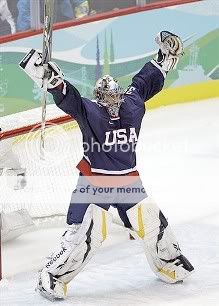
First, it was a hard loss. Losing the gold medal in overtime will never be easy. But the American effort was a very good in an outstanding tournament. With two silver medals in the last three Olympic Games, the United States is firmly ahead of the non-Canada remainder of their peers populating the Big Six. With the KHL exposed as a fraud, any NHL style tournament is going to favor the team that can dress a roster of good, current NHL players. Only Canada and the United States can do that.

It has been verified again; Canada produces the best players in the world. Coming into the tournament, only Zach Parise would be a lock to make the Canadian roster. As the tournament played out, you could definitely add Ryan Miller- and perhaps make a case that Ryan Suter and Brian Rafalski were better defensive options.

Still, the talent disparity was driven home during the overtime. Stripped of their ability to play a “hockey system”, the Americans were finally forced to trade chances with Canada. A fairly even game throughout, now the USA could not match Canada’s outstanding puck movement, let alone get it through the neutral zone. What pair of American wingers is fast, skilled and strong enough to run the give and go Crosby and Iginla won the game with?

This only serves to drive home the tremendous job Brian Burke, Ron Wilson and USA Hockey did assembling this roster. First, Burke internalized two lessons from Turino: in a short tournament, defense comes together first and competent world class defensemen are thicker on the ground than forwards. No matter how problematic your wingers and centers, a decent hockey nation can build a defense that keeps Russia and Canada to three goals. Accordingly, Burkee took his singular world class asset- goalie Ryan Miller- and surrounded him with a collection of defensemen that could play poised at this level. He left home the offensive minded puck movers and sturdy crease clearing pylons- and instead littered his roster with guys who could first get to the puck, then get it out of their own end. Simple. Burke did not take a power play quarterback- intent to just let his defense run a straightforward successful program of let it rip from the points.

Second, Burke realized this was not 1996. The 1996 World Cup was won fair and square by the USA. The USA was simply better- the crop of players generated by the miracle of 1980- than Canada’s collective. There were numerous Americans that would made the Canada roster. Heck, the automatics were: Chelios, both Hatchers, Leetch, LeClair, Tkachuk, Madano, Hull- before you even got to half-a-dozen debate-ables. Add in Mike Richter, and the USA was a better outfit.

That isn’t true any more. The production of hockey talent in the USA is on a downward trend. I mean, we always realized the USA isn’t likely to ever produce a Mario Lemieux, Jamomir Jagr, Sidney Crosby- our best national athletes are resolutely not playing hockey. But worse, a sport that lagged in popularity among young people has really cratered. In just the last decade, the popularity of hockey has fallen probably behind soccer and extreme winter sports for young athletes- as well as the traditional American team sports.

The core talent for American hockey has expanded zero- still all upper mid-west and New England, still zero participation outside whites with a moderate income floor. The outstanding American pro Leagues, which drive interest in young people in football, baseball and basketball, is literally close to non-existent in the US. The NHL is a bad League, with little footprint- that presents a product that by design wants to be the Swedish Elite League. What other major League clearly presented its best product in the 1980s? I say this facetiously- but it honestly says a lot about the League that it is probably looking to expand in Canada.

Burke did not fight this talent drain. He merely understood it. He asked his American journeyman forwards to not do much- just get three goals, be poised and play defense. Upfront, the US dressed twelve versions Chris Drury and Zach Parise. This minimalist strategy proved to be within their capacity most nights.

Ultimately, that is why it is bitter. The chance was there- there won’t be another time soon when USA has the better goalie. And Canada won’t fail to see the lesson about what sort of defensemen to bring to this tournament- goals and assists won’t matter so much next time. And the Russians won’t have that small, defense friendly rink in Sochi unless the NHL demands it as a price of participation.

Labels:

Thursday, February 25, 2010

Onward Brave Americans

Canada’s destruction of Russia- seriously, what was that all about?- was a frightening display of raw hockey power. I guess we won’t be seeing those “veterans” of the KHL anytime soon again. Canada dispensed with the macho nonsense, like winning battles in the corner, which merely serves to distract this awesome display of hockey skill. Instead they really ramped up the tempo, got the defensemen moving up, and simply throttled the Russian blueliners. Add in some shaky goaltending and an emotional performance in front of the home folks- and the result was big trouble followed by a stinking mess for the Soviets. Oddly then, the more compelling, interesting game was the top seed United States 2-0 win over Switzerland.

The Swiss have turned in back-to-back overachieving Olympic performances. They gave both Canada and the top seeded United States fits in the trio of games they’ve collectively played. So the top seeded USA need not apologize for the gritty win.

Because the Swiss have had a docket heavy on the top seeded USA and Canada the last two Games, I’ve seen them a lot- and as the link above shows I took a shine to them right away. The best approach to win this tournament is to be Canada- a complete collection of Hall of Fame hockey players leavened by elite all-stars. But in 2006, the Swiss figured out how to be competitive in this competition.

To wit, for all the talk about goalies and high-scoring wingers, you can play a competitive game in this tournament if you can roll out four quality defensemen. The key for these secondary teams (including the top seeded United States) is to be competent, poised in you own end: get it out, don’t turn it over, don’t give up odd man rushes, don’t leave guys uncovered fifteen feet from the goal, don’t turn it over. That is it. Simple- do that and you can keep Canada to a manageable two, three goals.

And while it helps to have world class players to score and tend goal, you just need a more basic competence to get it out, don’t turn it over, don’t give up odd man rushes, don’t leave guys uncovered fifteen feet from the goal, don’t turn it over. Those “skills” seem to be widely present- not necessarily world class. It doesn’t take Chris Chelios to run an orderly end; it merely takes a resolute Mark Streit.

Outside of Canada and Russia, the bottom half of the top six and the more competitive also-rans (Switzerland, Slovakia) are not making this tournament about star power and scoring, but rather playing mistake free in your end and keeping teams to a pair of goals or so. Again, it is something you can do with four or so good, not elite, committed defensemen. Almost all the potential upsets and actual upsets were low scoring disciplined affairs: Slovaks taking out the Swedes, the top seed USA and Swiss keeping Canada’s total down, Germans playing close to the Swedes, etc.

That is why the top seeded USA is advancing in this tournament- because they are darned orderly in their own end. Canada had a zillion shots- but not many rebounds or tic-tac-toe skill plays to unmarked guys. The game with Switzerland evolved into a game where two teams who are able to keep their ends orderly, free of cheap goals and good goalies. The Swiss have an NHL goalie, some good NHL defensemen, plus a veteran group of Euro-professionals who can mark their assignments and not commit bad turnovers. The top seeded US probably deserved a better result- outshooting the Swiss badly. But the top seeded Americans had a pair of goals disallowed (justifiably) that would have provided some breathing room with a bit more luck. In the end, the United States (the top seed) was saved by the their clicking, easily executed power play- just toss it back to the point and blast away. No chemistry required.

Before the tournament started, the consensus was that Zach Parise was probably the only American who makes Canada’s team. But watching Canada strafe the Russian defense with endless odd man rushes, rebound goals and emerging endlessly from the corners and walking up to the net- the antithesis of the “orderly end” I described above- the top seeded USA defenders are growing on me. As I wrote earlier in the week, Canada perhaps missed on a couple of defense choices. I can now see Parise, Miller and a defenseman or two making Canada’s roster.

Canada’s troubles with both top seeded USA and Switzerland, followed by Canada’s emphatic drubbing of Russia, moves both the top seeded USA and their two victories over the Swiss up a notch. Another game would be a real test of the theory: the top seeded Americans are way outclassed talent-wise, but you can cut a paper three goal deficit to something admittedly still south of even by holding the goalie edge and four good, unsentimental defensemen. Brian Rafalski holds top forwards and lines scoreless many nights. Now, there is no reason to look past the Finns (hot goalie). But maybe Rafalski and his top seeded peers could keep Canada to a manageable number to allow for a second sensational win.

Labels:

Tuesday, February 23, 2010

Sick And Tired

I am sick and tired of everyone saying what a great hockey team Canada has.


Their time is over.


Labels:

Monday, February 22, 2010

Slur Marty Brodeur!

Last night, the United States plunged our northern neighbor into one of those funks you love to watch them wallow in. “Woe Canada!” screams the Vancouver Sun. The CBC is inviting a whole bemused nation to weigh in to the question: what is wrong with Canada hockey? Sadly, the answer largely seems to be to slur the classy Marty Brodeur!

Sure, Ryan Miller outplayed Brodeur in the nets. But I thought Miller played well- not superb. He made some great stops- but good NHL goalies do that. But some of Canada’s goals weren’t exactly great ones. For example, Crosby’s big marker with three minutes to go wasn’t exactly a “good goal”.

I will point out that the United States has some good defensemen who played darn well. Canada got bunches of shots- but they scored zero goals of the skill type. By that I mean those “start at your own blue line, make five passes, tap it in skill goals” or “breakdowns leading to odd man rushes” or “one guy goes end to end because you cannot control his brilliant talent”. Canada has a huge capability to generate those free scores- but no one could shake loose all night.

But yes, you can’t argue with Miller’s 42 saves.

However, the United States found something they else could do besides blindly hoping Miller stole the game. The United States still could not make plays or skate with Canada- but they could bang with them- particularly the USA wingers versus Canada’s defense. Frankly, the one thing the Americans could categorically do last night was stand in front of Brodeur with impunity. Except for the late empty net goal, all of the US goals were screened or deflected in close.

I think Canada might have the wrong defense corps here? I have no ice time stats- but Pronger and Neidermeyer don’t seem dominant physically. In fact, they don’t seem to play much. Doughty, Keith and Weber are simply not crease clearers in that Pronger world-class mode.

The Americans turned the one attribute they have- an ability to bang, get rooted- into repeated goals- a formula Canada had no luck solving. No one consistently could get the American forwards out from in front. As the second period evolved, the Americans became committed to throwing it in and literally standing around within fifteen feet of Brodeur waiting for good things to happen. It did not reverse Canada’s dominance- but it meant more of the game was played out of the US end.

That approach bled over to the power play as well. Canada’s obviously has more potential on their power play than the US ever will. But in this short tournament, with little time for introductions and practice, maybe the more primitive American approach- wind up and fire toward all the loitering American forwards- has more merit?

And yes it helped, in the third, that Canada took bad penalties, looked tentative playing from behind under clock pressure and allowed said American late power-play goal. It is funny how the two teams have such different international culture. The Americans always play like something good is about to happen (see Salt Lake 2002). Conversely, Canada plays like everyone thinks they’re a bad shift away from having Mike Richards take their place on a regular line.

As the number one seed, the USA now gets a real winnable quarterfinal game outside the Big Six. This sets the Americans up to medal. In the two later medal round games, they’ll only need to win once to get something- and can’t play both Russia and Canada (they play each other in the other side of the quarterfinal draw). And any medal is a good result for this young USA team built with an eye on Russia in 2014.

Labels:

Wednesday, February 17, 2010

Better Than Looking Indifferent Against Latvia

The Olympics finally started yesterday with the commencement of the Men’s Ice Hockey tournament. Unlike the 2006 Games, the United States is off to a good start- a solid, high-effort win over the game Swiss.

The 2006 United States team had no real chance to medal in Turino. Revisiting some of these reviews of their games back then- a tie with Latvia, loss to Slovakia- brings back all the ick. John Grahame and Robert Esche pitched as answers in goal! Slovakia dressing Zdeno Chara (definitely a world class player), Lubomir Visnovsky (leading NHL defensemen in points at that time) and Andrej Meszaros on defense- better than anything the mighty US could muster.

This American team is a step up in class. Sure, the pundits are right- it is a very young team. At no point yesterday could the US been described as heady and mistake-free. They aren’t slick at all- and showed no ability to get into the offensive zone other than dump and chase. Did you notice the unbelievable number of guys simply running into each other? But they were high effort- as Coach Brian Burke says in this morning’s PDN:
"Young players sometimes try things that older players won't," he was saying the other day. "Sometimes they do things that our older players won't."

Like? Like taking a stick to your nose while diving for the puck on your first-ever Olympic shift. Like blocking shots in a preliminary-round game with your team up two goals. Like playing a puck along the boards on all fours just to keep it inside the offensive zone, or rushing the puck from one end of the ice to the other, surprising the opposing defensemen, surprising the opposing goaltender, surprising the 16,706 who came to watch Team USA's victory over Switzerland yesterday.
Ryan Miller is a substantial upgrade in goal. And Ryan Suter’s good point play on the power play gives them “something simple to do” on the man advantage- not altogether unimportant with limited practice and get acquainted time. Just dump it in and let him play quarterback.

Baseball has the five tool player. I sort of break players down into four categories: speed, strength/size, puck control and scoring. This US team is not going to compete with Canada and Russia on the latter two categories. I mean, Jeff Carter is sitting home- and he’d be on the United States’ first power play unit. But the United States can skate and man!- really hit. The officials ignored the physical play, really had the whistles in the pocket, for yesterday’s slate of games. With no NHL style enforcers, the US might get a real chance to pound on and face wash Sidney Crosby and pals Sunday- see how bad they want this.

Canada’s disappointing 2006 finish wasn’t exactly the result of being unlucky or untalented- but playing with too little urgency (remember Switzerland in 2006?). They didn’t look too urgent yesterday against a bad Norge team (ed. note: I love Norge!)

But that is just it. This tournament doesn’t begin until the knock-out round, which everyone makes. The United Sates needs these games to get organized, get playing time together. Canada just needs to be ready to answer the bell next week.

Labels: ,